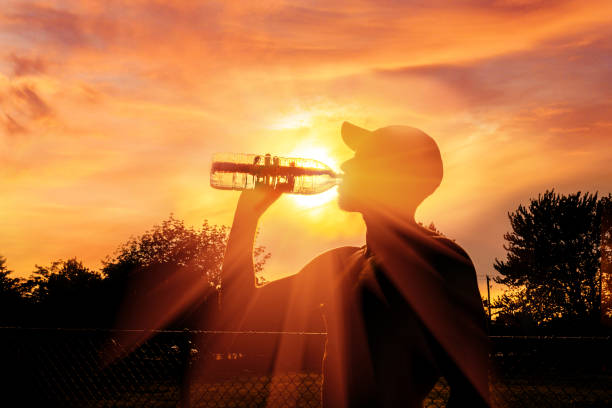
Exercise related heat exhaustion is a common illness, especially during the summers. It usually occurs when your body temperature rises above normal, due to increased physiological demands. Hence, it is very important to understand how your body cools itself when heat stress is present.
Understanding thermoregulation:
In order to balance the rate of internal heat production with the environmental heat loss, the body maintains a core temperature of 98.6º F (37º C). This is regulated by the cardiovascular system which adapts by increasing heart rate and stroke volume. Evaporation is the body’s primary protection against overheating. Through this process, the body transfers heat from its core by evaporating sweat from the skin and respiratory passages. It is important to understand, however, that sweating alone does not cool the body. In order for heat to be released, sweat must be evaporated to lower the skin temperature by cooler air. Humidity is another factor that impairs evaporation, which increases the rate of sweating, causing a greater loss of body water, which in turn leads to dehydration.
Clearing the misconception:
Sweating does not mean fat loss. In order to lose fat and build lean muscle mass, being in calorie deficit is important. During the sweating process, blood vessels dilate and hot liquid from the vessels is pumped onto your skin by your sweat glands, so that heat can be transferred to the air around the body. By wiping sweat away, you are hindering that process and preventing your body from cooling off like it needs to. The International Fitness Association IFA recommends that the temperatures for aerobics, cardio, weight training and Pilates gyms should be at about 63 ºF to 70ºF (18 ºC to 22ºC). Yoga should be warmer but no higher than 81ºF(27ºC). Aquatic therapy in pool areas should be in the 70 ºF to 80 ºF (21ºC-26º C) range. Humidity levels for all areas should be around 40% to 60%.
Takeaway message:
While progression in exercise is important to achieve your fitness goals, it is crucial to understand your body’s adaptability to training. Also, in cases of where fainting or heat exhaustion has occurred before, it is advisable to keep a track of heart rate and blood pressure to avoid any serious consequences.
Leave a Reply